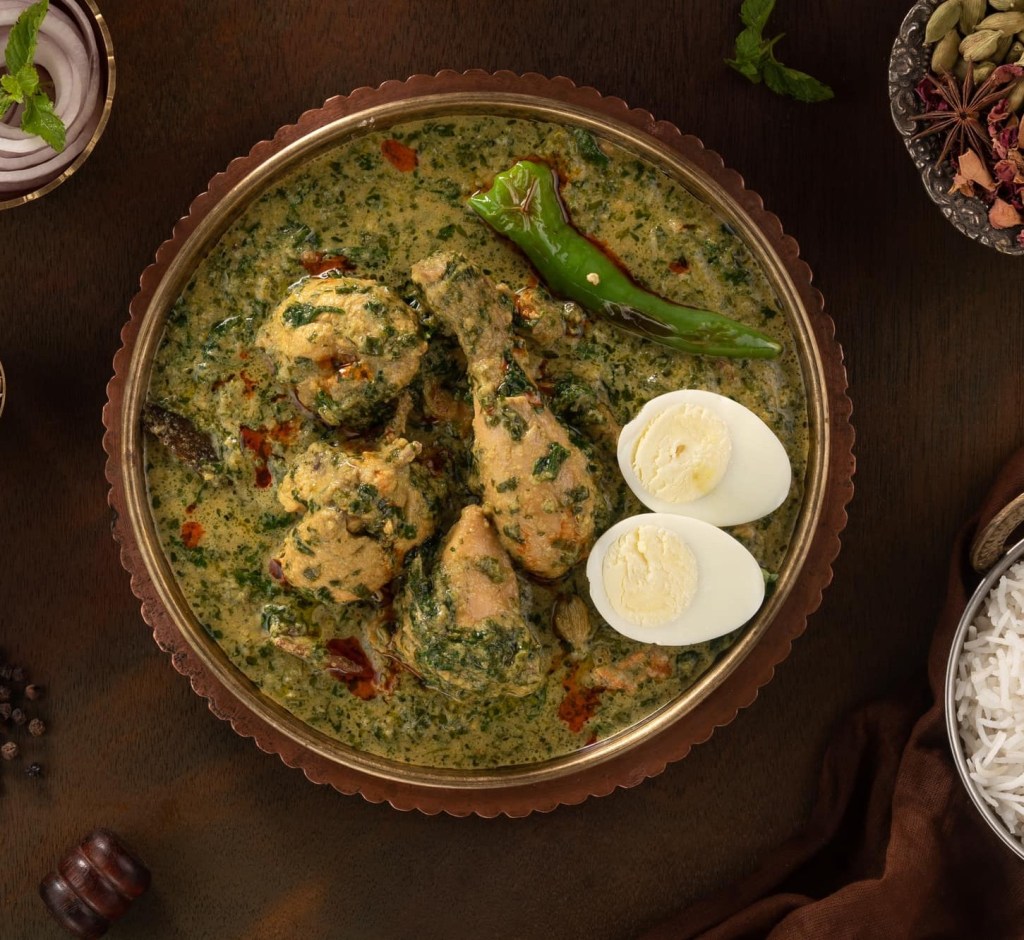
The other day, during a lively discussion about Bhopali cuisine on a social platform, the name Bhopali Rezala kept coming up. As someone who’s from Bhopal—and admittedly sceptical about the idea of Bhopal having a distinct cuisine of its own—I couldn’t help but pause. I’ve eaten Rezala many times, yet never really questioned it. What is this intriguing dish, exactly? Where does it come from? And more curiously, how did it end up becoming part of Bhopal’s culinary landscape?
As I kept digging, I came across an article titled – Dhakai Khaabaar (The Cuisine of Dhaka), published by Dhaka: The Bangladesh Asiatic Society in 2010, asserts that the term Rezala evolved from words like ‘rozil’ and ‘rozila,’. Rozil is the Bengali pronunciation of razil, and rozila. These were times when Islamic traditions and Mughal culinary ideas began reshaping the food culture (Muslim rulers dominated the political scene in Bengal from the 14th to the 18th century). Though Rezala’s exact origins are a bit fuzzy, it is believed that it emerged as locals began embracing new dishes inspired by the new rulers – dishes like kacche gosth ke biryani, baqarkhani roti, safed pulao etc…
Ohh…one interesting bit: It’s said women came up with this idea of soaking green chillies (cheap and easily available) in milk and then adding the chillies and milk to the korma. The result? Rezala – a creamy, subtly spiced dish, typically paired with murg pulao, safed pulao or roti in Dhaka.
So how did Chicken Rezala became popular and a signature dish in West Bengal and eventually in Bhopal?
Well, the plot thickens in 1856 with the arrival of Nawab Wajid Ali Shah in Bengal. The exiled nawab of Awadh brought with him an army of bawarchi’s (cooks) & masaalchi’s (spice master’s), who sprinkled royal magic into simple Bengali dishes to delight the tastebuds of the Nawab in exile. In Metiaburj (locality where the last Nawab of Awadh lived and died) dishes like Rezala were refined with ingredients like posto/khuskhus ( the residue of opium production), ghee, dry fruits and aromatic spices. Voila! The poor man’s dish turned into a royal fare and emerged as a star dish.
At the same time, Bengal’s culinary landscape was fast changing. Think, Calcutta Biryani with potatoes, Murshidabad’s Fish Biryani and little known Sheherwali cuisine – a rare blend of Rajasthani, Mughlai, and Bengali flavours. Sherehwali food, primarily vegetarian, is known for being elegant, rich and fragranced with rosewater, saffron etc…
Now onto the main event: Bhopali Rezala.
Bhopal is the only princely state that was ruled by women for over 150 years – four generations of powerful Begum’s. They weren’t just brilliant leaders they had a flair for food too…
Legend has it that their royal chef’s – raqabdaar’s and khansamaa’s played with spices and methods until they hit the culinary gold: Bhopali Rezala. Unlike it’s Dhakai / Bengali cousins, the Bhopali version uses curd or yoghurt as a base, giving it that iconic characteristic tang. And then there’s a cool twist also: Chef Ranveer Brar and several historians says that fresh coriander was used generously. Why? Bhopal depended on lake water for years, which often caused indigestion – coriander, known for its digestive properties, became a star ingredient. It helps in gut balance too, the reason behind generous use of coriander in and around Bhopal.
And then there is a green connection too. Nawab Sultan Jehan Begum 12th ruler of Bhopal (1901-1926) loved theme-based colour-specific festivities. One of them, Jashn-e-Hariyali, a festival held in the monsoon season, where everything was green. Food. Dresses. Décor. Thanks to its herbaceous hue, Rezala became the showstopper of the feast along with methi keema, kacche keeme ki tikiya, Filfora (signature dishes of Bhopal).
Since then, it’s been the undisputed king of Bhopali cuisine – Rezala, a dish that carries with it centuries of stories, culture, spices and soul…
 Site Title
Leave a comment